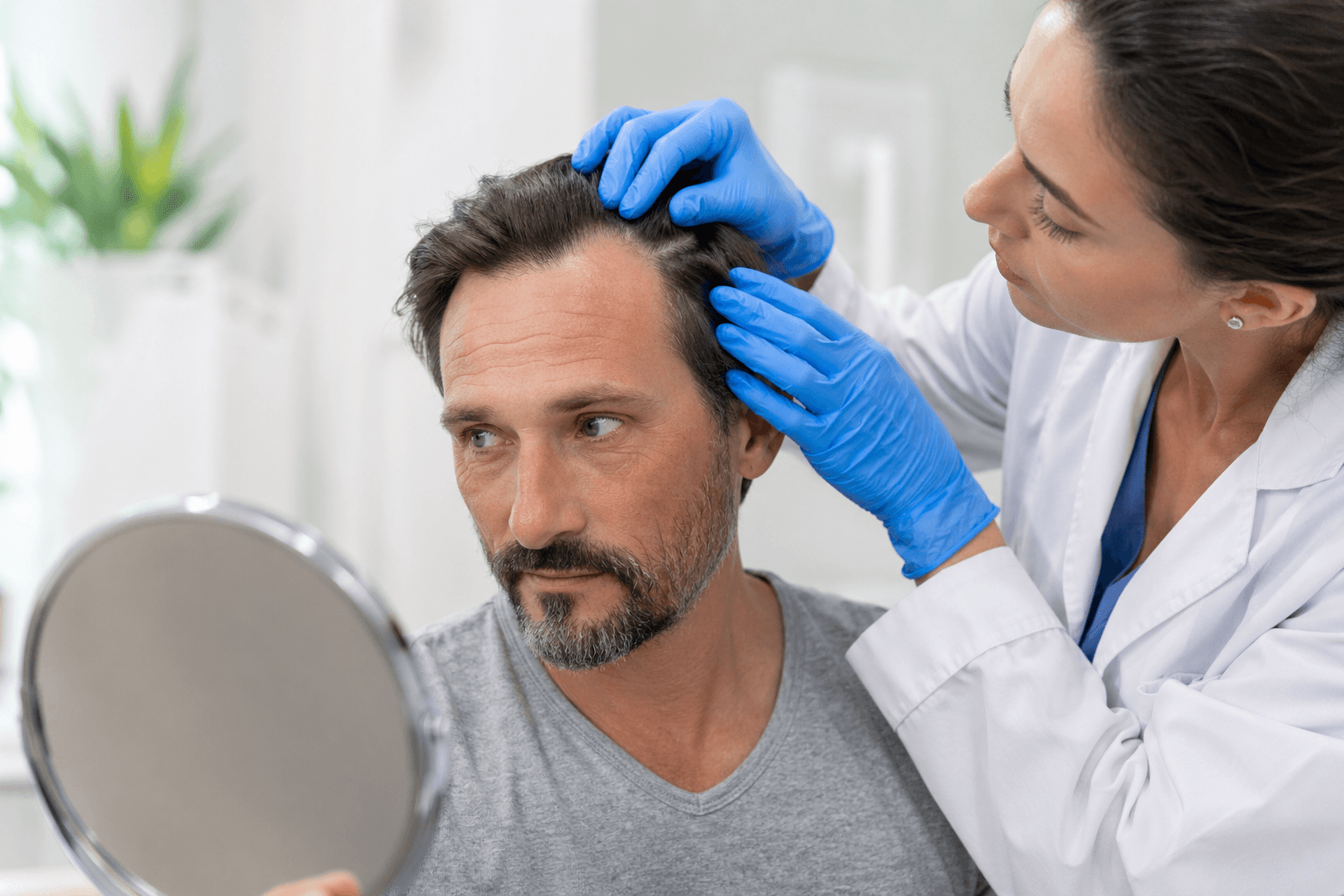
Does Stem Cell Hair Restoration Work? A Realistic Look at the Science Behind Hair Regrowth
Hair loss has a way of creeping in quietly, then suddenly feeling impossible to ignore. Whether it shows up as a widening part, thinning crown, or receding hairline, the search for solutions often leads people to cutting-edge options. One of the most talked-about topics today is stem cell hair restoration. But the real question remains: does stem cell hair restoration work?
If you are exploring options in Sandy Springs or surrounding areas like Cobb, Buckhead, Atlanta, or Dunwoody, GA, understanding what is real, what is promising, and what is still evolving can help you make smarter decisions about your hair restoration journey.
Updated April 2026
Understanding the Buzz Around Stem Cell Hair Restoration
Stem cells are often described as the body’s master cells. They have the ability to develop into different types of cells and play a key role in repair and regeneration. In theory, this makes them an exciting candidate for restoring hair follicles that have become weak or inactive.
When people talk about stem cell hair restoration, they are usually referring to treatments designed to stimulate dormant hair follicles, improve scalp health, and encourage natural hair regrowth using regenerative techniques.
But here is where things get important.
There is a difference between:
- True stem cell therapies that are still largely in research phases
- Regenerative hair treatments inspired by stem cell science that are currently available
Understanding that distinction helps set realistic expectations.
How Hair Loss Actually Happens
Before diving into whether stem cell approaches work, it helps to understand why hair loss occurs in the first place.
Hair loss is typically influenced by:
- Genetics, especially androgenetic alopecia
- Hormonal changes
- Stress or lifestyle factors
- Aging
- Inflammation or scalp health issues
Hair follicles do not always disappear completely. In many cases, they shrink or become inactive. That is why many modern treatments focus on reactivating these follicles rather than replacing them entirely.
What Stem Cell Hair Restoration Claims to Do
The idea behind stem cell-based hair restoration is simple in concept.
It aims to:
- Reactivate dormant hair follicles
- Improve blood flow and nutrient delivery to the scalp
- Stimulate new hair growth cycles
- Strengthen existing hair strands
In research settings, scientists are exploring ways to actually grow new hair follicles using stem cells. That is where the future is headed, but it is not widely available in everyday clinical practice yet.
Most treatments available today focus on stimulating your body’s natural regenerative processes rather than transplanting lab-grown follicles.
So… Does Stem Cell Hair Restoration Work?
The honest answer is nuanced.
What science supports right now
There is growing evidence that regenerative treatments inspired by stem cell science can:
- Improve hair density
- Slow down hair thinning
- Enhance scalp health
- Encourage thicker, healthier hair growth over time
These results tend to be more noticeable in early to moderate stages of hair loss.
What is still developing
True stem cell follicle cloning or complete hair regeneration is still under clinical research. While promising, it is not yet a standard, widely accessible treatment.
What this means for you
If you are expecting a complete reversal of advanced baldness overnight, current options will likely fall short.
However, if your goal is to:
- Strengthen thinning hair
- Improve fullness
- Maintain existing hair
- Delay further loss
Then regenerative hair treatments can absolutely be effective.
What Treatments Are Actually Available Today?
Many clinics today offer advanced hair restoration treatments that are inspired by regenerative science. These often include:
- Growth factor-based therapies
- Scalp rejuvenation treatments
- Advanced non-invasive hair renewal systems
For example, treatments like LC Bright Hair Renew focus on improving scalp health and stimulating natural hair growth using modern technology and biologically active components.
These are not marketed as stem cell transplants, but they align with the same goal: encouraging your body to repair and regenerate hair more effectively.
Who Is the Best Candidate?
Not everyone will respond the same way to hair restoration treatments. The best candidates are typically:
- Individuals in early stages of hair thinning
- People experiencing gradual hair loss rather than complete baldness
- Those with active but weakened hair follicles
- Patients looking for non-surgical options
If you are in Sandy Springs, Buckhead, or Atlanta and starting to notice thinning, early action often leads to better results.
What Kind of Results Can You Expect?
Results vary depending on the individual, but most people can expect:
In the first few months
- Reduced shedding
- Improved scalp condition
After consistent treatment
- Noticeable thickening of hair strands
- Increased density in thinning areas
- Healthier hair growth cycles
Hair restoration is not a one-time fix. It is a process that requires consistency and realistic expectations.
Why Scalp Health Matters More Than You Think
One of the biggest shifts in modern hair restoration is the focus on scalp health.
A healthy scalp:
- Supports stronger follicles
- Improves circulation
- Reduces inflammation
- Creates the ideal environment for hair growth
Many regenerative treatments prioritize this foundation, which is why they can be effective even without true stem cell implantation.
Comparing Stem Cell Claims vs Reality
- Completely regrows hair in all cases
→ Works best in early to moderate hair loss - Creates brand new follicles today
→ Still in the research phase and not widely available - One treatment solves everything
→ Requires ongoing care and consistency - Instant results
→ Gradual improvement happens over several months
Understanding these differences helps set realistic expectations and focus on treatments that truly support long-term hair health.
Local Insight: Hair Restoration in Sandy Springs and Atlanta
In areas like Sandy Springs, Cobb, Buckhead, and Dunwoody, more people are exploring non-surgical hair restoration options.
Why?
- Busy lifestyles make downtime less appealing
- There is growing awareness of preventative treatments
- Natural-looking results are a priority
Rather than jumping straight to surgical solutions, many individuals are choosing advanced regenerative approaches first.
Are These Treatments Worth It?
If you are asking whether stem cell hair restoration works, the better question might be:
Is regenerative hair treatment worth trying?
For many people, the answer is yes, especially when:
- Hair loss is caught early
- Expectations are realistic
- Treatments are done consistently
It is less about chasing a miracle cure and more about supporting your hair’s natural ability to grow stronger over time.
FAQs About Stem Cell Hair Restoration
Does stem cell hair restoration work for severe hair loss?
It is less effective for advanced hair loss where follicles are no longer active. In those cases, other options may be more appropriate.
Is stem cell hair restoration permanent?
Results are not necessarily permanent. Maintenance treatments are usually needed to sustain improvements.
Is it safe?
Most regenerative hair treatments available today are considered safe when performed by qualified professionals. Always choose a reputable provider.
How long does it take to see results?
Most patients begin noticing changes within 2 to 4 months, with continued improvement over time.
Is it better than hair transplants?
They serve different purposes. Regenerative treatments focus on improving existing hair, while transplants relocate follicles. Many people explore non-surgical options first.
The Bottom Line on Hair Regrowth Innovation
Stem cell hair restoration is one of the most exciting developments in the world of aesthetics, but it is important to separate hype from reality.
While true stem cell follicle creation is still evolving, today’s regenerative treatments are already delivering meaningful improvements for people dealing with thinning hair.
If you are in Sandy Springs or nearby areas like Atlanta, Buckhead, Cobb, or Dunwoody, exploring modern hair restoration options early can make a significant difference in your results.
Not Quite Magic, But Pretty Close
Hair restoration is no longer about waiting until it is too late. It is about being proactive, informed, and realistic.
Stem cell-based ideas are shaping the future, but even today’s technology offers powerful ways to strengthen, support, and restore your hair.
The key is starting at the right time, choosing the right approach, and committing to the process.


.webp)
.webp)
.webp)