What Are the Best Hair Restoration Options in Buckhead, Georgia?
Noticing your hairline sitting a little further back than it used to, or your part looking a bit wider in the mirror, is one of those things a lot of men notice long before they say anything out loud about it. By the time most men start actually researching hair restoration, they have usually already spent months quietly wondering about it. If that sounds familiar, here is a straightforward look at what causes hair thinning, what options actually work, and what is available in Buckhead, Georgia.
Why Hair Thinning Happens
Hair loss in men is most commonly driven by androgenetic alopecia, more commonly known as male pattern baldness, which is largely genetic and related to how hair follicles respond to hormones over time. Follicles gradually shrink, producing thinner, shorter strands until they eventually stop producing visible hair altogether. Beyond genetics, a few other factors can accelerate or contribute to thinning.
- Chronic stress, which can push more follicles into a resting phase than usual
- Nutritional deficiencies, particularly iron and certain vitamins
- Underlying health conditions or hormonal imbalances
- Scalp inflammation or poor scalp circulation
Understanding which of these is driving your specific pattern matters, since the right treatment approach depends heavily on the underlying cause.
Does Hair Restoration Actually Work?
For many men, yes, particularly when treatment starts while follicles are still active but underperforming rather than after they have gone fully dormant. This is why earlier intervention tends to produce better results than waiting. Regenerative treatments work by supporting the health and activity of follicles that are still present, which is a meaningfully different (and often more achievable) goal than trying to regrow hair in areas that have been bald for years.
Hair Restoration Options Available at VRAI
PRP Therapy
PRP hair restoration uses platelet rich plasma drawn from your own blood, concentrated and reinjected into the scalp to stimulate dormant or weakened follicles. Because it uses your body's own growth factors, it is a regenerative approach rather than a topical cover up, working to actually improve the health of the follicle over time. Most treatment plans involve a series of sessions, with visible improvement typically developing over several months as follicles cycle into a stronger growth phase.
LC Bright Hair and Skin Renewal
LC Bright takes a collagen stimulating approach to scalp health, aimed at improving circulation and follicle strength. It is often used alongside other treatments as part of a broader restoration plan rather than as a standalone solution.
Wharton's Jelly Stem Cell Boosters
For men looking for a more advanced regenerative option, VRAI's Wharton's Jelly stem cell treatments use growth factor rich stem cell derived solutions to support tissue regeneration, an approach increasingly used in scalp and hair restoration protocols for clients seeking a more intensive treatment path.
A Comprehensive Hair Loss Treatment Plan
VRAI's hair loss treatment program brings these approaches together into a plan built around your specific pattern of thinning, taking into account genetics, scalp health, and lifestyle factors rather than applying a single generic protocol to every client.
What a Consultation Actually Involves
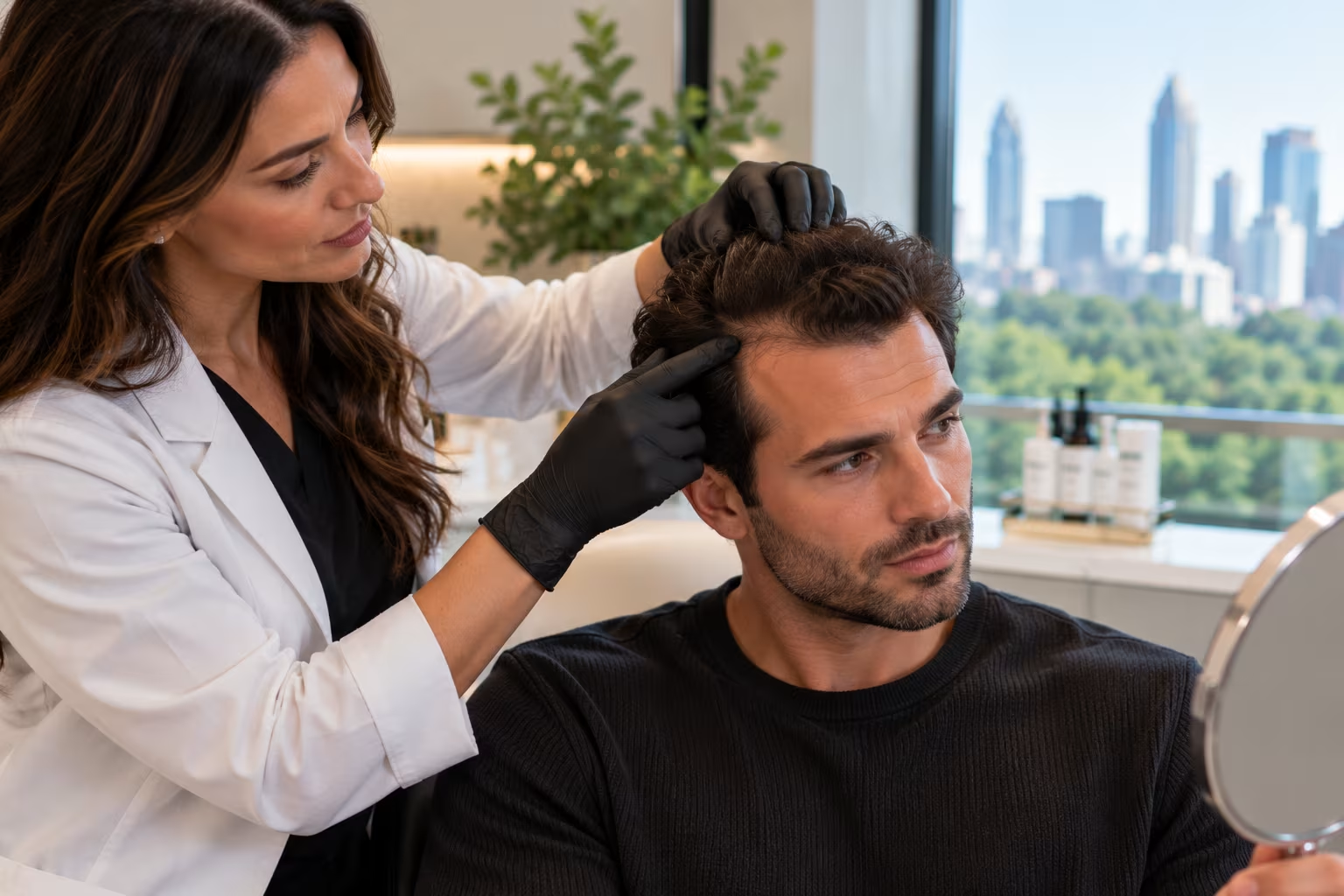
A real hair restoration consultation goes beyond a quick glance at your hairline. At VRAI, it typically includes a detailed look at your scalp and follicle density, a conversation about your family history and timeline of thinning, and a review of any lifestyle or health factors that might be contributing. From there, a plan is built around what is realistically achievable given your specific stage of thinning, since setting honest expectations upfront tends to lead to far better satisfaction with results than chasing an unrealistic outcome.
What Results Actually Look Like Over Time
Hair restoration is not an overnight process, and any provider who promises immediate dramatic results is not being fully honest with you. Most men begin noticing early changes, like reduced shedding and slightly stronger texture, within a few months of starting treatment. More visible improvements in density typically continue developing over six to twelve months as new growth cycles complete. Consistency matters here more than almost anything else. Treatments that are started and then abandoned after one or two sessions rarely produce the results a full, recommended series can achieve.
Why Early Treatment Makes a Real Difference
The earlier thinning is addressed, the more follicles are typically still active and responsive to treatment. Waiting years to address early signs of thinning means working with fewer viable follicles by the time treatment starts, which is part of why so many providers, VRAI included, encourage men not to wait until hair loss is advanced before booking a consultation. Even if you are not ready to commit to a treatment plan, an early consultation gives you a clear baseline and a realistic sense of your options before more follicles become dormant.
What to Expect During Treatment Sessions
Sessions for treatments like PRP typically last 60 to 90 minutes and involve numbing to keep the process comfortable, with most men reporting minimal discomfort throughout. There is no significant downtime, which means returning to work or your regular schedule the same day is standard.
Combining Treatments for a More Complete Approach
For men dealing with more advanced or longer standing thinning, a single treatment type is not always the most effective path forward. Combining approaches, such as pairing PRP sessions with Wharton's Jelly stem cell boosters or LC Bright scalp treatments, can address follicle health from multiple angles at once. This layered approach tends to be particularly relevant for men who have noticed thinning progressing over several years rather than a recent change, since more established patterns of hair loss often benefit from a more comprehensive strategy rather than a single isolated treatment.
A provider who takes the time to build this kind of combined plan, rather than defaulting to whichever single treatment is easiest to sell, is generally a strong sign of genuine expertise in hair restoration specifically, rather than treating it as a minor add on to a broader menu of aesthetic services. At VRAI, this often means starting with an assessment of exactly which combination of regenerative treatments makes sense for your specific stage of thinning, then adjusting that plan as your scalp responds over the following months.
Patience remains a key part of the process regardless of which combination of treatments you pursue, since hair growth cycles simply take time to complete. Men who commit to a full recommended series, rather than stopping after a session or two based on early impatience, consistently report better outcomes than those who abandon treatment before it has had a real chance to work.
Frequently Asked Questions
At what age should men start considering hair restoration treatment? There is no single answer, since it depends on when thinning begins and how it progresses. Many men start noticing changes in their late twenties to thirties, and earlier consultation tends to preserve more treatment options.
How is PRP different from over the counter hair loss products? PRP works by directly stimulating follicles using your own concentrated growth factors, while most over the counter products only address the surface level of the hair shaft rather than the follicle itself.
Can hair restoration treatments regrow hair in areas that have been bald for years? Results are generally more effective on follicles that are still active but underperforming. Areas with long term, fully dormant follicles are typically more difficult to restore, which is why earlier treatment tends to produce better outcomes.
How many sessions does a typical treatment plan involve? This varies based on your specific pattern of thinning, but most plans involve a series of sessions over several months, followed by periodic maintenance treatments.
Is hair restoration treatment painful? Numbing is used to keep sessions comfortable, and most men describe the experience as minimal discomfort rather than significant pain.
Take the First Step Before It Becomes a Bigger Concern
Hair thinning tends to feel like a private worry long before it becomes a conversation, but addressing it early is exactly what gives treatment the best chance of working. For men across Buckhead, Sandy Springs, Atlanta, Cobb, and Dunwoody noticing the early signs, schedule a consultation with VRAI to get a clear, honest assessment of your options.