
What Can PRP Treat in Buckhead, Georgia? A Look at Skin and Hair Concerns
If you have been searching for answers to under-eye hollows that never seem to fade, skin that has lost its bounce, or a hairline that looks a little more sparse than it used to, you are not alone. These are some of the most common concerns we hear from clients at our Buckhead location, and they are also some of the most misunderstood. People often assume these changes simply come with age and there is nothing to be done, but that is not the case. One treatment in particular has become a favorite among our Buckhead clients for addressing both skin and hair concerns using the body's own healing resources: PRP.
Platelet-rich plasma, or PRP, is not new science dressed up in a trendy name. It is a well-researched, regenerative approach that draws on your own blood's healing components to encourage new collagen, calmer inflammation, and healthier tissue, whether that tissue is the delicate skin under your eyes or the hair follicles across your scalp. Below, we walk through the concerns that typically bring people to this conversation, what is actually happening beneath the surface, and how PRP works as a solution for both.
Why Do My Under-Eyes Look Dark and Hollow?
Dark circles and hollowing under the eyes are one of the most frequent complaints we hear from clients across Buckhead, Sandy Springs, and Atlanta. The under-eye area has some of the thinnest skin on the entire face, with very little supporting fat or muscle. As we age, that area loses volume and collagen faster than almost anywhere else, which allows the underlying blood vessels and muscle to show through more clearly. This creates that shadowed, tired look even after a full night's sleep.
Genetics, sun exposure, allergies, and simple dehydration can all make the appearance worse, but the root cause is almost always structural: thinning skin and diminishing collagen support. That is exactly the kind of concern PRP is designed to help correct, because it works by rebuilding what is thinning rather than just masking it.
If this sounds familiar, our detailed guide on how PRP addresses dark under-eye circles in Buckhead, Georgia breaks down exactly what to expect from the process.
What Causes Dull, Crepey, or Tired-Looking Skin?
Beyond the eyes, many clients tell us their skin overall feels less resilient than it used to, thinner, crepey in texture, and lacking the glow it once had. This typically comes down to a natural slowdown in collagen and elastin production, which begins as early as our mid-twenties and accelerates with sun exposure, stress, and environmental pollutants common in a busy city like Atlanta.
When collagen production slows, skin loses its firmness and ability to bounce back, which shows up as fine lines, uneven texture, and a duller complexion. This is a very different mechanism than surface-level dryness, which is why moisturizers alone rarely solve it. The skin needs a genuine signal to start producing new collagen again, and that is where the growth factors in PRP come in.
Why Is My Hair Thinning or Receding?
On the hair side, thinning and shedding are concerns we see just as often, particularly among clients in their thirties, forties, and beyond who are noticing a widening part line, a receding hairline, or hair that simply feels less dense than it used to. Hair thinning can stem from genetics, hormonal shifts, stress, nutrient deficiencies, or simply the natural aging of hair follicles, which gradually produce thinner, weaker strands over time.
What is happening at the follicle level is similar to what happens in aging skin: reduced blood flow and a slowdown in the cellular signals that keep follicles active and healthy. When follicles stop receiving strong growth signals, they shift into a resting phase more often, which is what leads to visible thinning. This is a mechanism that responds well to regenerative treatment, which is why PRP has become such a popular option for hair restoration.
For a deeper look at this specific use, our article on PRP for hair growth in Sandy Springs, Buckhead, and Atlanta covers the full picture.
When Should You Consider Treatment Instead of Waiting It Out?
A common question we get from Buckhead clients is how to know when a concern has moved from "normal aging" to something worth treating. A few signals tend to stand out:
- Under-eye hollowing or discoloration that concealer no longer hides well
- Skin that looks noticeably duller or more textured than it did a year or two ago
- A hairline that has visibly moved, or a part line that keeps widening
- Shedding that feels heavier than usual, especially over several months
None of these need to reach a severe point before treatment makes sense. In fact, PRP tends to work best when it is used earlier, while follicles and skin cells are still responsive, rather than waiting until the concern is advanced.
How Does PRP Actually Work for Skin and Hair?
This is where the science becomes genuinely interesting. PRP starts with a small blood draw, similar to a routine lab test. That sample is then processed in a centrifuge to separate and concentrate the platelets, which are rich in growth factors your body naturally uses for healing and tissue repair.
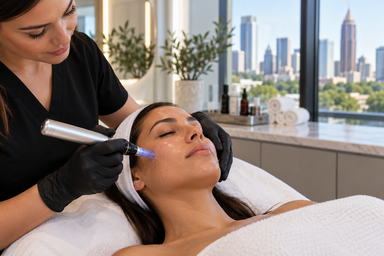
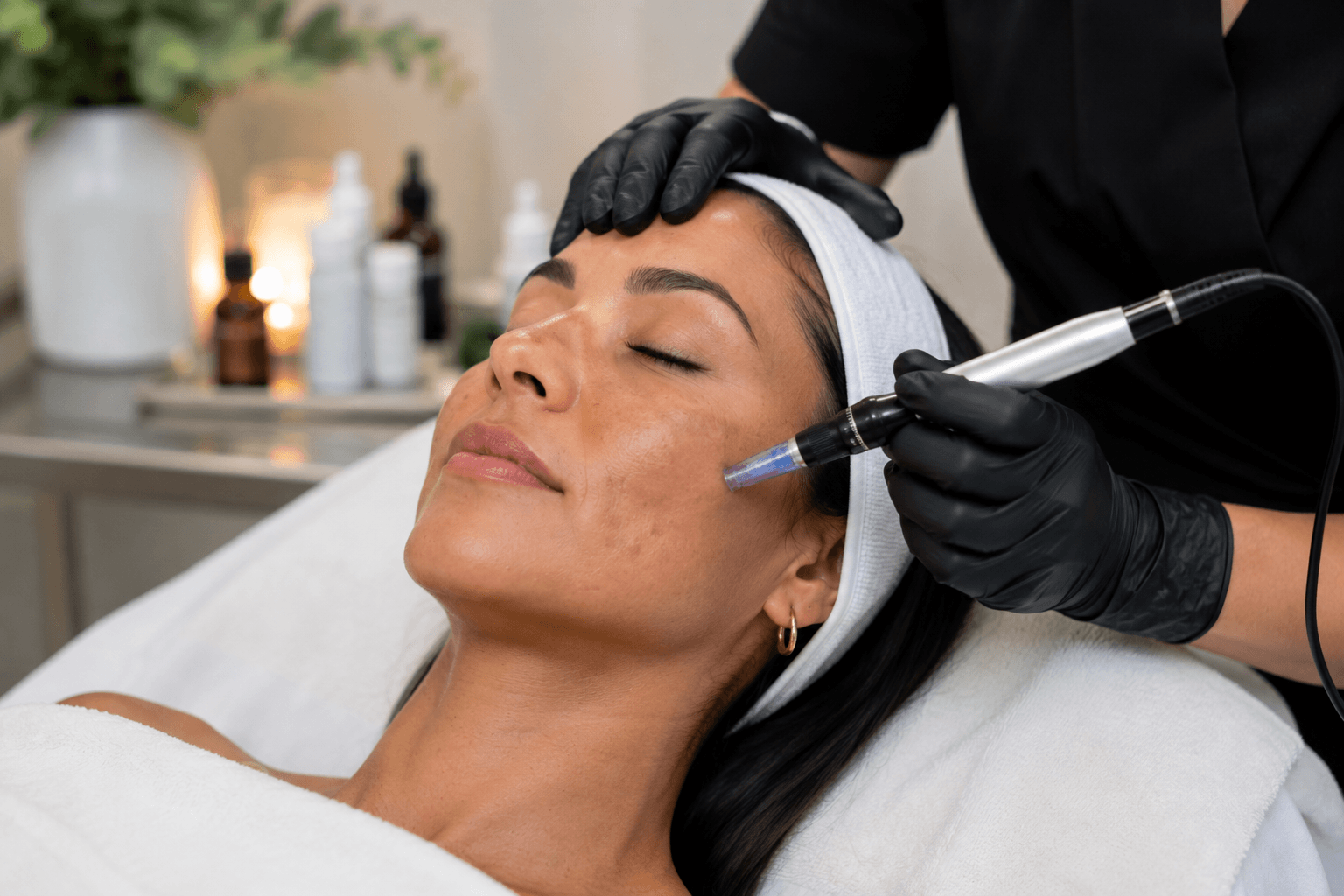
Once concentrated, this platelet-rich plasma is reintroduced into the treatment area, either through microneedling passes for skin or targeted injections into the scalp for hair. The growth factors then go to work signaling nearby cells to increase collagen production, improve circulation, and, in the case of hair, encourage dormant follicles back into an active growth phase.
Because the treatment uses your own biological material, there is no foreign substance introduced to the body, which is part of why it has become such a trusted option among clients who want results that look and feel completely natural. You can see the full scope of how we approach this at our PRP and PRF skin rejuvenation service page, and if hair is your primary concern, our hair loss solutions page outlines that side of the treatment in more detail.
Why Choose VRAI for PRP in Buckhead, Georgia?
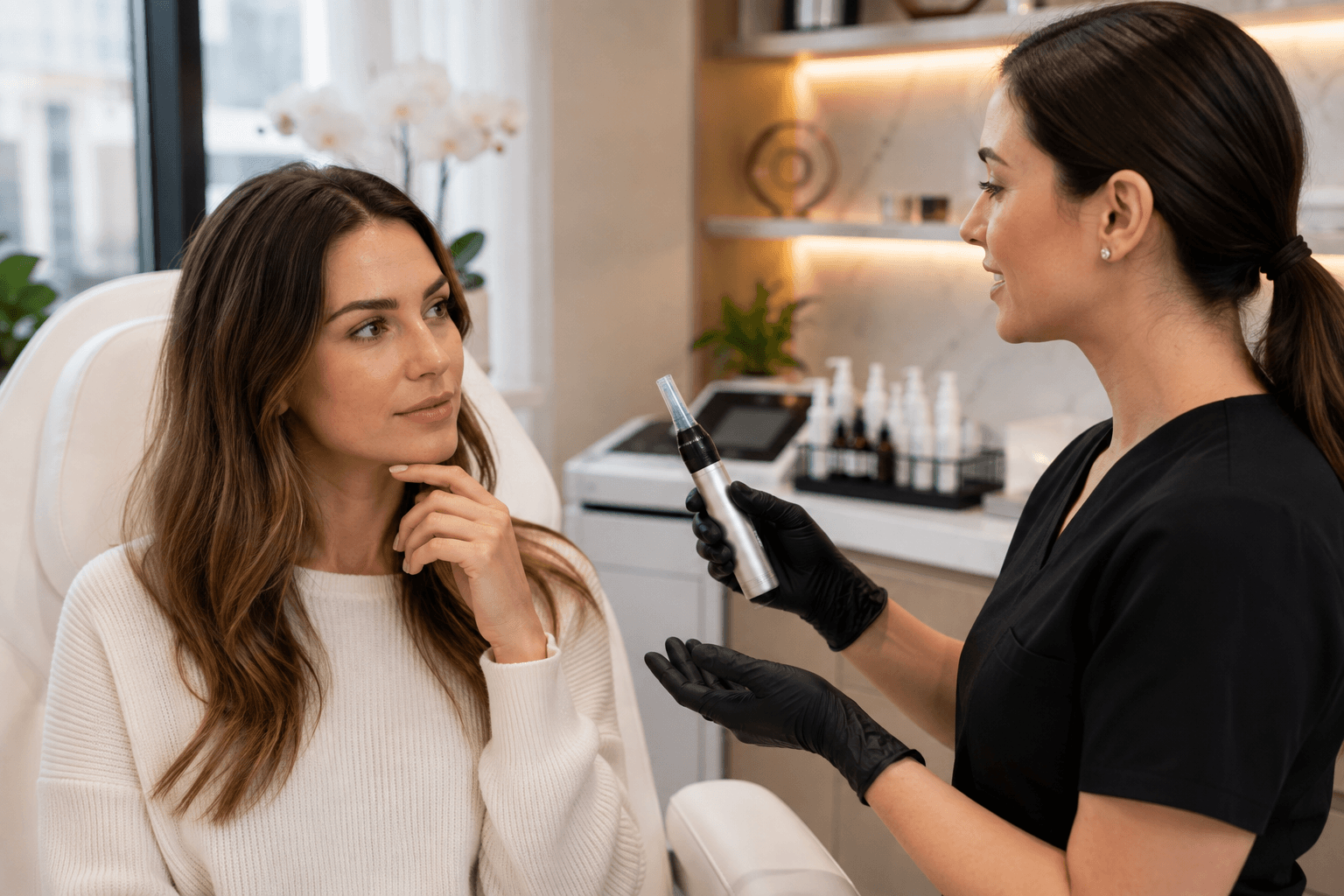
At VRAI, we approach PRP the same way we approach every treatment on our menu: with a philosophy that blends artistry with clinical precision. Our Buckhead clients often come to us already having researched PRP elsewhere, and what tends to set our approach apart is the level of customization. No two clients have the same collagen needs, hairline pattern, or skin concerns, so our providers tailor the injection points, depth, and complementary treatments to each person's specific goals.
We also frequently pair PRP with other regenerative offerings available through our full services menu, including microneedling, skin boosters, and growth factor treatments, to further support the results for clients looking for a comprehensive rejuvenation plan rather than a single isolated treatment.
Our location makes us a convenient option not just for Buckhead residents but for clients throughout Sandy Springs, Cobb, Dunwoody, and greater Atlanta who are seeking a concierge-level experience for this kind of regenerative care. If you would like a broader look at how this treatment fits within a natural aesthetics approach, our piece on PRP in Sandy Springs and why your skin deserves more than a quick fix is a helpful companion read, as is our overview of PRP therapy for youthful skin and hair in Atlanta.
What Should You Expect During and After Treatment?
The process itself is straightforward and typically completed within an hour, depending on whether you are treating skin, hair, or both. After the blood draw and processing, most clients describe the injections or microneedling passes as mildly uncomfortable rather than painful, and numbing options are available to keep the experience comfortable throughout.
Downtime is minimal. You may notice some redness or mild swelling for a day or two, similar to a light sunburn for skin treatments, or slight tenderness on the scalp for hair treatments. Most clients return to normal activities the same day or the next. Results build gradually as collagen regenerates and follicles cycle into growth, which means visible improvement typically unfolds over the following weeks to months, with a series of sessions recommended for the best outcome.
This information has been updated for August 2026 to reflect our current treatment protocols and client experience at our Buckhead location.
Frequently Asked Questions
How many PRP sessions are needed to see results for hair growth? Most clients need a series of three to four sessions spaced several weeks apart to see meaningful improvement in hair density, followed by periodic maintenance sessions to sustain results.
Is PRP for skin the same process as PRP for hair growth? The underlying platelet-rich plasma is prepared the same way, but the application differs. Skin treatments often combine PRP with microneedling, while hair treatments involve direct injections into the scalp at the follicle level.
Does PRP hurt more for under-eye treatment or scalp treatment? Both areas are sensitive, but numbing cream is used for under-eye treatments and most clients tolerate scalp injections well. Discomfort is generally mild and brief for both.
Can PRP be combined with other treatments at VRAI? Yes. PRP is often paired with microneedling, skin boosters, or growth factor treatments for enhanced skin results, and can also complement other hair restoration approaches depending on your goals.
How soon will I notice a difference after starting PRP? Subtle improvements in skin texture or scalp health can appear within a few weeks, but the more noticeable changes in collagen quality and hair density typically develop over two to three months as new cellular activity builds.
The Real Story Behind Your Glow (and Your Growth)
Dark circles, dull skin, and thinning hair rarely have a single quick fix, but they do have a shared solution rooted in your own body's ability to heal and regenerate. PRP offers a way to work with that natural process rather than against it, which is exactly why it has become such a trusted option for clients across Buckhead and the greater Atlanta area.
If you are ready to explore what this treatment could look like for you, visit our homepage to learn more about our approach, or head straight to our contact page to schedule a consultation. You can also browse more insights on our blog for additional guidance on regenerative treatments and what to expect along the way.


.webp)
.webp)
.webp)