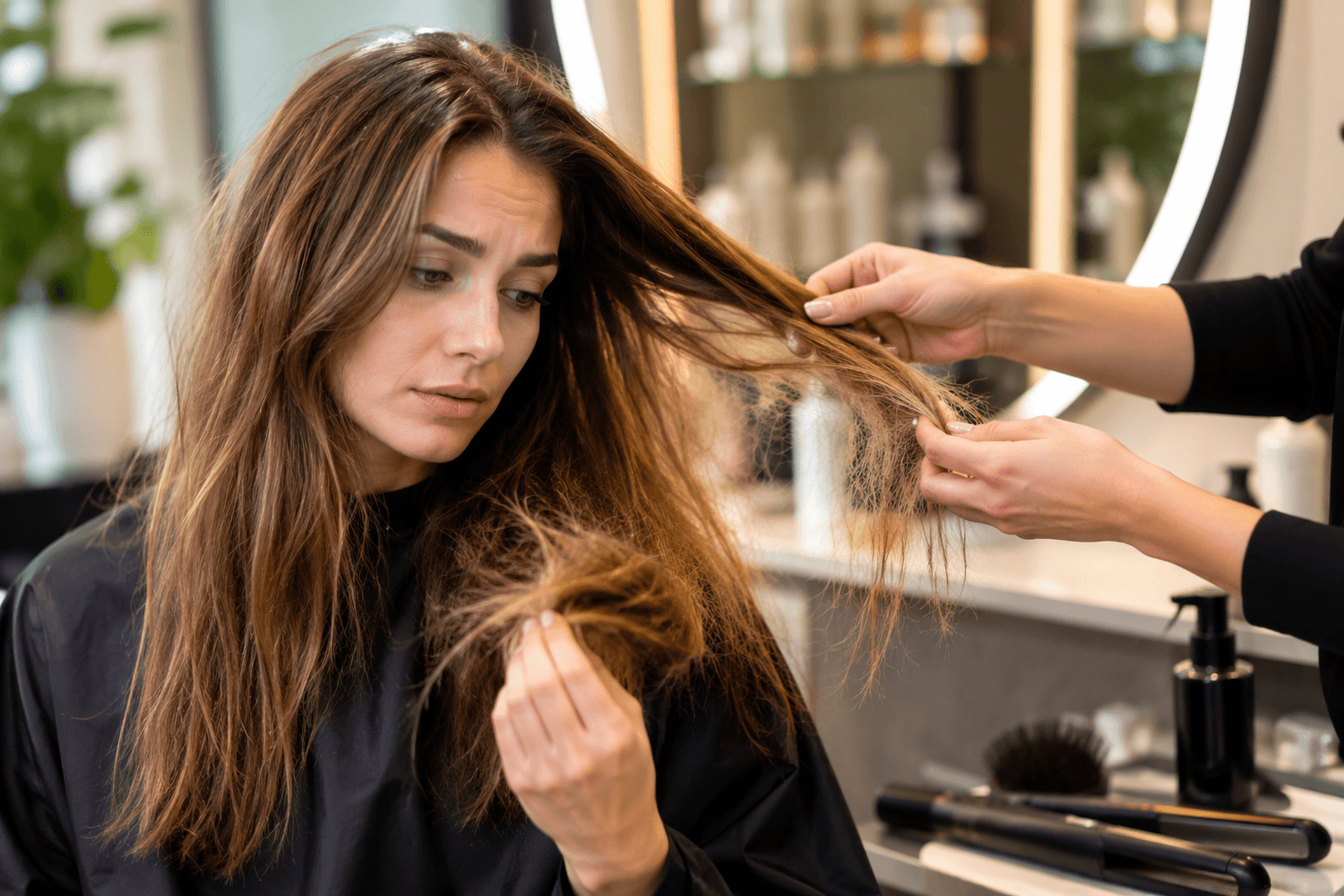
Can You Really Reverse Hair Damage From Color and Heat Styling in Buckhead?
There's a difference between hair that's simply thinning and hair that's damaged, but a lot of people lump the two together and assume nothing can be done for either. If your hair feels brittle, breaks easily, or has lost the shine and elasticity it used to have, that's often a repair problem rather than a regrowth problem, and the good news is that repair is very possible.
Updated August 2026
What's the Difference Between Damaged Hair and Thinning Hair?
Thinning hair usually refers to the follicle itself, meaning fewer active hairs growing or a shorter growth cycle overall. Damaged hair is different. It's about the condition of the hair shaft that already exists, whether that's dryness, breakage, split ends, or a loss of the protein structure that gives hair its strength and shine.
You can absolutely have both at once, which is common, but they require different approaches. Damaged hair often responds well to strengthening and restorative treatments, while thinning hair usually needs a strategy focused on the follicle and scalp health.
Can Over-Styling and Coloring Cause Permanent Follicle Damage?
In most cases, heat and color damage stays limited to the hair shaft rather than the follicle, which is good news because it means the damage is often reversible with the right treatment approach. Repeated heat styling breaks down the protein bonds that give hair its structure, while chemical processing from coloring or bleaching strips natural oils and weakens the hair's outer layer.
That said, if heat or chemical damage happens frequently enough, or if tight hairstyles are added into the mix, it can eventually put stress on the follicle itself, which is where things start to overlap with thinning. This is why catching damage early matters, rather than waiting until it becomes a bigger issue.
What Are the Warning Signs You're Past At-Home Fixes?
A few signs that a deep conditioner from the drugstore probably isn't going to cut it anymore:
- Hair breaks when lightly stretched rather than snapping back
- Ends look frayed or feathery even after a fresh trim
- Hair feels dry no matter how much product is applied
- Noticeably less shine or bounce compared to a year or two ago
- Postpartum shedding that hasn't slowed down after several months
If several of these sound familiar, it's a sign the damage has moved past what surface level products can repair.
What In-Office Treatments Actually Rebuild Hair Health?
This is where treatments that work below the surface come in. Hair restoration options at VRAI are designed to support both hair strength and follicle health, which matters if your damage has started to overlap with thinning.
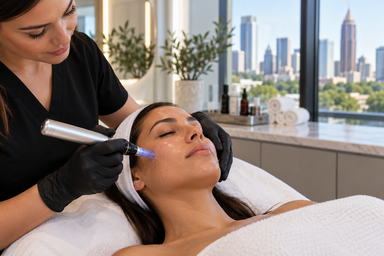
One option worth understanding specifically is our LC Bright Hair and Skin Renewal treatment, which works by delivering nourishing, restorative ingredients directly to the scalp and hair shaft, supporting repair from within rather than just coating the hair temporarily the way a conditioner would.
How Does LC Bright Hair Renewal Support Regrowth?
The treatment focuses on improving the scalp environment, which is often overlooked when people are dealing with damaged hair. A healthy scalp supports stronger hair growth going forward, while also helping existing hair retain moisture and elasticity. For patients dealing with both damage and some degree of thinning, this dual focus tends to produce more noticeable improvement than treating either issue in isolation.
Depending on your specific concerns, this can also be paired with PRP for hair, which uses your own blood's growth factors to support the follicle directly. You can learn more about that option on our PRP and PRF skin rejuvenation page.
What Should You Expect From a Hair Consultation?
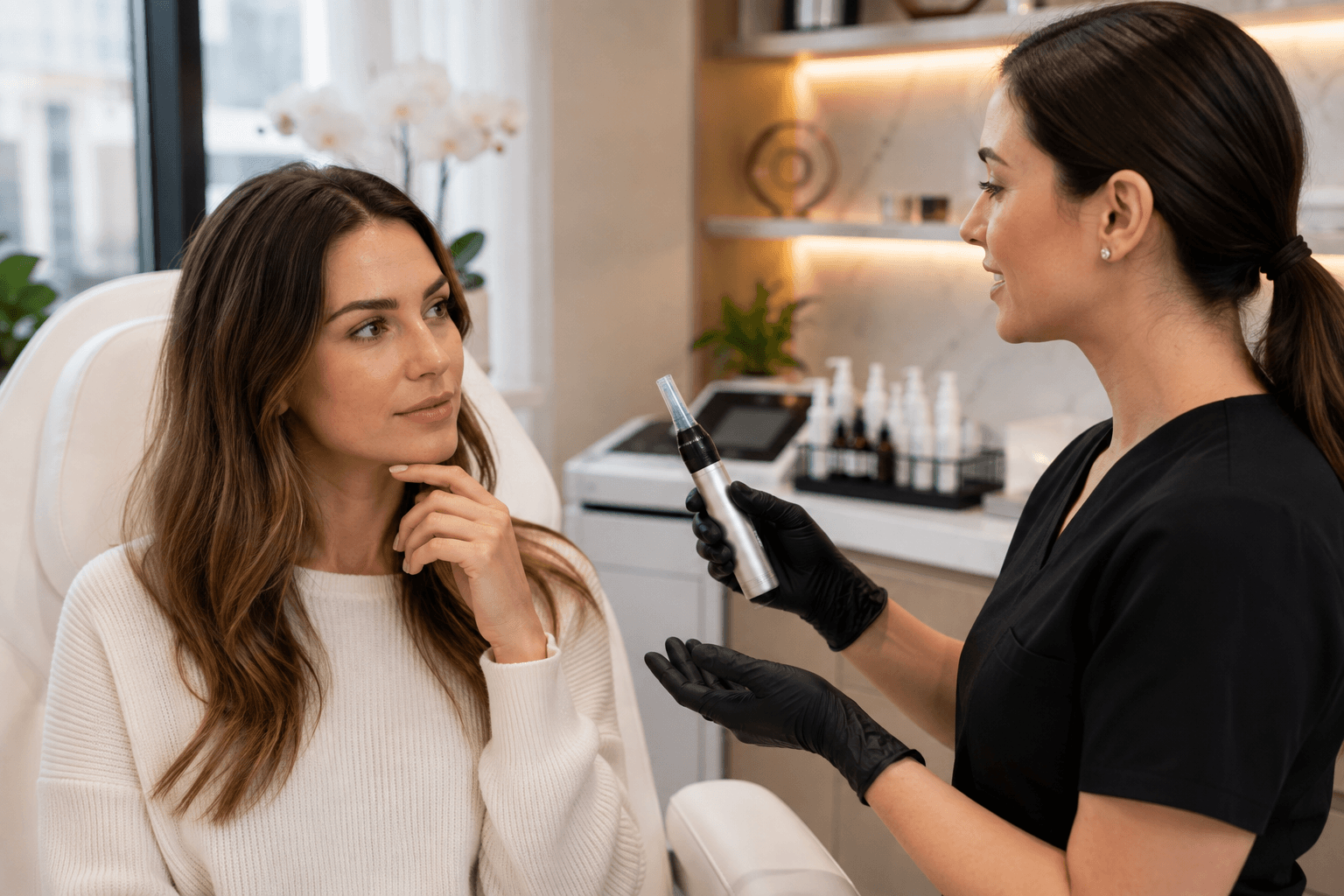
A proper hair consultation should include a look at your scalp, a conversation about your styling habits and hair history, and questions about any recent life changes, since things like pregnancy, significant weight change, or high stress periods can all affect hair health. From there, your provider can recommend whether your case calls for restorative treatment, follicle focused treatment, or a combination of both.
Bringing This Home to Buckhead
Damaged hair doesn't have to be something you just manage with a good conditioner forever. If your hair has lost its strength, shine, or bounce, a more targeted approach can make a real difference. For patients further along in the thinning process, our post on why hair thinning happens is a useful next read to understand where damage ends and thinning begins.
FAQs
Can hair damage from heat styling actually be reversed? In most cases, yes. Since heat damage typically affects the hair shaft rather than the follicle, targeted restorative treatments can meaningfully improve strength and shine.
How is damaged hair different from hair loss? Damaged hair refers to the condition of existing hair strands, while hair loss involves the follicle producing fewer or weaker hairs. They can occur together but need different treatment approaches.
How long does it take to restore damaged hair? Most patients notice improved texture and manageability within a few weeks of starting treatment, with continued improvement over a series of sessions.
Is LC Bright Hair Renewal the same as a hair loss treatment? It's related but distinct. LC Bright Hair Renewal focuses on restoring hair and scalp health, and it's often used alongside more targeted hair loss treatments for patients dealing with both concerns.
Hair Today, Stronger Tomorrow
Brittle, damaged hair is frustrating, but it's rarely permanent when it's addressed with the right treatment. Book a hair consultation with our Buckhead team to figure out what your hair actually needs to bounce back.



.webp)
.webp)
.webp)